


Eatventure
4.721.36K Reviews
App Specs
- Version
- 1.53.2
- Updated On
- License
- Free
- Downloads
- 50,000,000+
- Developer
- Lessmore GmbH
- Categories
- Simulation
- Platform
- Android, iOS
Screenshots



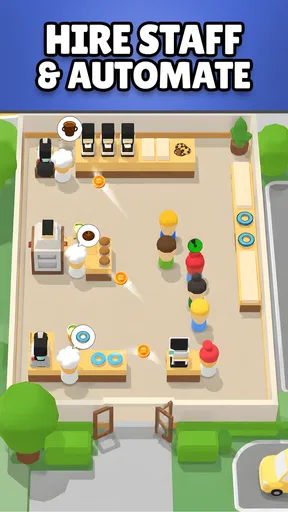

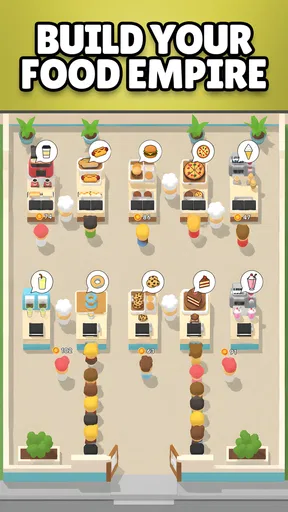


 Analysis by AppCompare
What makes Eatventure work well in a shared household is that its basic loop is easy to understand at a glance: serve customers, improve the business, and keep moving forward. I can imagine handing the phone to someone beside me and having them grasp the immediate goal without a long explanation. That makes it a convenient game to take turns with during a quiet moment, though I would treat it as one person’s save rather than a shared family project.
Taking turns without taking over
For a shared device, a simple ground rule helps: agree who is playing before anyone taps through the next stretch of progress. In a game built around upgrades and progression, a well-meant purchase or a quick run by another person can change what the main player was planning to do. I would let younger or less experienced players handle the routine serving while the person who owns the session decides how to spend resources and when to move on.
This also makes the game a better fit for short handoffs than for simultaneous play. One person can make a little progress, then pass the device back; there is no need to coordinate a complicated group strategy. If everyone wants a separate restaurant and independent decisions, separate play sessions are a cleaner arrangement than sharing one ongoing game.
Keep spending and session choices clear
The game is free to start, but it includes in-app purchases, so I would set expectations before letting a child use a device with a saved payment method. The sensible household rule is straightforward: playing does not mean permission to buy. I would also keep the device owner’s account and payment decisions with the adult, rather than treating a shared screen as a shared account.
That boundary matters even if a player only intends to check progress or make a small improvement. The available purchase options range from $1.09 to $109.99 per item, which is a broad enough spread that I would not leave spending assumptions unstated. If your household prefers games with no optional purchases at all, this is not the neatest match; if you are comfortable with free play and clear limits, the purchase model is easier to manage.
Who will enjoy the pace—and who may not
I would recommend this simulation game to someone who likes watching a small operation grow through repeated, understandable decisions. It suits short breaks, relaxed evenings, and children who enjoy cartoon-style business themes with an adult nearby to explain purchase boundaries. Its Everyone age rating makes it broadly accessible, but an age label is not a substitute for a household’s own rules about screen time, spending, or shared devices.
It is less suitable for a player looking for deep restaurant planning, precise control over every part of a business, or a story that carries the experience. Compared with management games that emphasize detailed staffing, inventories, or long-term financial planning, this one leans toward accessible progression and quick feedback. I would choose a more complex simulator if the appeal is careful optimization; I would choose a calmer, purchase-free option if even optional spending prompts are unwelcome.
Worth Reading Before You Choose

Flipboard Shows What News Apps Must Do Beyond the Feed

Switching to Android Auto Means Rethinking Your Driving Routine

Google Calendar Makes a Crowded Week Easier to Manage

Ludo King Makes the Most of the Minutes Between Plans

Baby Panda World Brings Quick Play to Modern Phones, but Its Game Library Feels Busy

ESPN’s Live Game View Makes Following Close Games Easier
A low-pressure routine, with a few useful habits
A realistic way to fit it into the day is to play during a short wait—while tea cools or before heading out—then stop once you have reached a natural pause. That keeps the game in the role of a light diversion instead of turning every spare minute into a reason to check back. I also find it useful to decide what the next upgrade is meant to improve before spending: a little intention makes the progression feel more like management and less like tapping every available button.
When several people share a device, tell the next player what you changed and what you planned to do next. That small handoff prevents accidental detours and helps a child understand that progress belongs to the person whose session it is, even if everyone is watching. If nobody wants to keep track of turns or purchases, it will probably be more enjoyable as an individual game.
Behind that household fit is a very simple hook: Eatventure turns the idea of growing a food business into a sequence of small, satisfying decisions. I downloaded this gem the other day, and let me tell you, it's a deliciously addictive feast for any aspiring restaurateur.
Getting Started: Setting Up Your Culinary Empire
So, what's the first thing I noticed when I fired up Eatventure? The vibrant and inviting interface. It’s like opening the doors to a bustling kitchen, complete with sizzling sounds and the clinking of cutlery. The app kicks off by guiding you through the basics. You start with a humble food truck, serving up simple yet scrumptious dishes. It’s all about getting those early wins by keeping your customers happy and your service swift.
As you progress, you unlock new recipes and upgrade your kitchen equipment. The learning curve is smooth, and before you know it, you’re juggling multiple orders like a pro. The game cleverly balances challenge with reward, keeping you hooked with just the right amount of tension.
Building Your Brand: From Food Truck to Five-Star Restaurant
One of the coolest features is the progression from a small-time food truck to a full-blown restaurant chain. Each level brings new challenges and opportunities. You’ll have to manage staff, tweak your menu, and even deal with the occasional customer complaint. It’s a fantastic simulation of real-world restaurant management, minus the stress of a Gordon Ramsay meltdown.
The customization options are a highlight. You can personalize your restaurant’s look, choose your menu, and even design your own culinary masterpieces. It’s like your own little MasterChef studio, but without the pressure of a ticking clock.
Daily Challenges and Events: Keeping You on Your Toes
Eatventure keeps things fresh with daily challenges and special events. These events are a fun way to earn extra rewards and test your skills against other players. Whether it’s a spicy taco festival or a gourmet burger showdown, there’s always something happening to keep you engaged.
And let’s not forget the leaderboard. Competing against friends and players worldwide adds a layer of excitement. It’s immensely satisfying to see your name climb the ranks, proving your culinary prowess to the world.
Graphics and Sound: A Feast for the Senses
The graphics are colorful and charming, perfectly capturing the lively atmosphere of a bustling restaurant. The characters have a quirky, cartoonish style that adds to the fun. The sound design is equally impressive, with upbeat tunes and realistic kitchen noises that make the game world feel alive.
What I love most is how these elements work together to create an immersive experience. It’s like being in your own animated cooking show, complete with all the bells and whistles.
How it fits among restaurant games
It helps to go in with the right expectation: despite the restaurant theme, this is a light simulation game, not a demanding business-management sandbox. Its appeal is the visible rhythm of serving, upgrading, and seeing the operation expand. If you enjoy making a small improvement and then watching its effect, that loop is satisfying. If you want to set detailed prices, plan supply chains, or micromanage every worker, a more elaborate restaurant simulator will suit you better.
The distinction matters when deciding whether the game is for a child or for an adult who enjoys strategy. It offers a taste of management through simple choices, but it should not be mistaken for a realistic lesson in running a restaurant. I like it most as an accessible, food-themed progression game: the business framing gives each upgrade a purpose, while the decisions remain easy to pick up during a brief session.
Small decisions that make play feel better
One useful habit is to pause before moving on to the next available improvement and ask what would make the current stretch feel smoother. That keeps choices tied to the way you are playing rather than turning each session into a race to tap everything. When a younger player is involved, talking through that choice can make the game a gentle introduction to prioritizing: there may be several tempting options, but you can choose one goal at a time.
I would also be selective about how much attention I give to competitive elements. Events and leaderboards can add a reason to return, but they can shift a relaxed game into a comparison with other players. If that pressure is not enjoyable, the restaurant-building loop still has its own appeal; there is no need to make rank the measure of a good session. For a household, that is a helpful distinction: one person may enjoy the contest, while another can simply play at their own pace.
What to expect from the game over time
The early stages are especially easy to understand because the game introduces its basic actions gradually. Later, the attraction is less about learning a complicated rule set and more about deciding whether you enjoy the repeated cycle of improving the business. That is a strength for casual play, but it also explains why someone seeking a new kind of challenge every few minutes may eventually want a different game.
It is also worth thinking about the difference between a brief check-in and a longer play session. The simple controls make it approachable when you only have a little time, while the steady progression can tempt you to continue past the pause you intended to take. I would use a natural stopping point—finishing a small goal, for instance—rather than opening it automatically whenever there is a spare moment. That advice is particularly useful on a shared family device, where clear turns prevent one person’s casual check-in from becoming everyone else’s lost time.
Who makes the game, and what the numbers suggest
Lessmore UG develops the game, which is free to download and has optional purchases. It has a 4.8 average from around 387,000 ratings, with more than 50 million installs, so there is clearly a broad audience for its compact restaurant-growth loop. Those figures do not tell me whether a particular household will enjoy it, but they do suggest that it has reached far beyond people who normally seek out intricate management games.
The current version is 1.49.0, and the game runs on Android 8.0 or later. It was released on February 28, 2022, and its Everyone rating makes it easy to consider for a mixed-age household. I would still look at the actual play habits and purchase boundaries that suit your family rather than relying on the age label alone. The best fit is a player who likes a cheerful, uncomplicated business theme and understands that optional purchases are separate from ordinary play.
My household verdict
For me, this is a good shared-device choice when the goal is to pass a few relaxed minutes around a clear, friendly theme, provided the device owner keeps control of spending and everyone knows whose progress they are changing. Its strongest household quality is accessibility: the restaurant idea is immediately legible, and short turns are easy to arrange. Its main trade-off is that the same progression loop may feel repetitive to players who want deeper planning or a more varied challenge.
I would recommend trying it for a child or adult who enjoys watching a modest food business grow, but I would skip it for a family that needs completely purchase-free play or wants separate, coordinated profiles on one device. As a solo game, it is an easygoing way to fill a short break; as a shared game, it works best with clear turns rather than shared ownership. If that balance suits your home, it can be a pleasant little restaurant project to dip into without expecting a full-scale management simulator.
Building Your Brand: From Food Truck to Five-Star Restaurant
One of the coolest features is the progression from a small-time food truck to a full-blown restaurant chain. Each level brings new challenges and opportunities. You’ll have to manage staff, tweak your menu, and even deal with the occasional customer complaint. It’s a fantastic simulation of real-world restaurant management, minus the stress of a Gordon Ramsay meltdown.
The customization options are a highlight. You can personalize your restaurant’s look, choose your menu, and even design your own culinary masterpieces. It’s like your own little MasterChef studio, but without the pressure of a ticking clock.
Daily Challenges and Events: Keeping You on Your Toes
Eatventure keeps things fresh with daily challenges and special events. These events are a fun way to earn extra rewards and test your skills against other players. Whether it’s a spicy taco festival or a gourmet burger showdown, there’s always something happening to keep you engaged.
And let’s not forget the leaderboard. Competing against friends and players worldwide adds a layer of excitement. It’s immensely satisfying to see your name climb the ranks, proving your culinary prowess to the world.
Graphics and Sound: A Feast for the Senses
The graphics are colorful and charming, perfectly capturing the lively atmosphere of a bustling restaurant. The characters have a quirky, cartoonish style that adds to the fun. The sound design is equally impressive, with upbeat tunes and realistic kitchen noises that make the game world feel alive.
What I love most is how these elements work together to create an immersive experience. It’s like being in your own animated cooking show, complete with all the bells and whistles.
Final Thoughts: A Must-Try for Foodies and Gamers Alike
If you’ve ever dreamed of running your own restaurant, Eatventure is a must-try. It’s engaging, visually appealing, and offers just the right amount of challenge to keep you coming back for more. Whether you’re a hardcore gamer or just looking for a fun way to pass the time, this app serves up a delightful mix of strategy and creativity.
So, roll up your sleeves, fire up the grill, and dive into the culinary chaos of Eatventure. Trust me, your inner chef will thank you.
Pros
- User-friendly interface makes navigation easy.
- Offers a variety of recipes and cuisines.
- Includes nutritional information for dishes.
- Features a meal planner for organization.
- Regular updates with new content.
Cons
- Requires a stable internet connection.
- Some features behind a paywall.
- Ads can interrupt the user experience.
- Limited offline functionality.
- Occasional recipe inaccuracies.
FAQs for Eatventure
What is Eatventure and how does it work?
Eatventure is a simulation game where players manage their own restaurant. Start with a small food stand and gradually expand to a larger dining empire. Players must strategize to serve customers efficiently, upgrade equipment, and hire staff to increase profits and unlock new levels. The game combines time management and resource allocation, offering an engaging experience for casual gamers.
Is Eatventure free to play?
Eatventure is free to download and play. However, it offers in-app purchases that can enhance gameplay. Players can buy virtual currency to speed up progress or unlock special items. While these purchases can enhance the experience, they are optional, and players can enjoy the game fully without spending money.
What platforms is Eatventure available on?
Eatventure is available for both Android and iOS devices. You can download it from the Google Play Store or the Apple App Store. The game is optimized for mobile devices, ensuring smooth gameplay and an intuitive interface on smartphones and tablets.
Does Eatventure require an internet connection?
Eatventure can be played offline, making it convenient for users who want to enjoy the game without an internet connection. However, some features, such as in-app purchases and updates, require an online connection. Playing online can also offer additional benefits, like leaderboards and event participation.
Are there any age restrictions for playing Eatventure?
Eatventure is designed to be family-friendly and is suitable for a wide audience. The game is rated for ages 3 and up, making it appropriate for children and adults alike. Its colorful graphics and intuitive gameplay are engaging for younger players, while the strategic elements appeal to older audiences.


